
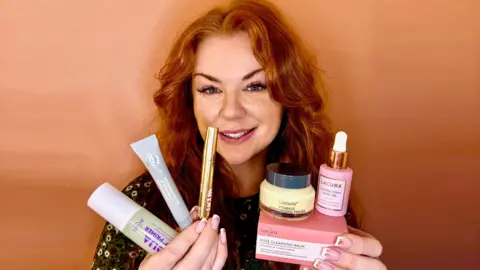
 Rachael Parnell
When Rachael Parnell found out a supermarket was selling a fresh skincare range that looked akin to products from high-end label Augustinus Bader, she was "incredibly excited".
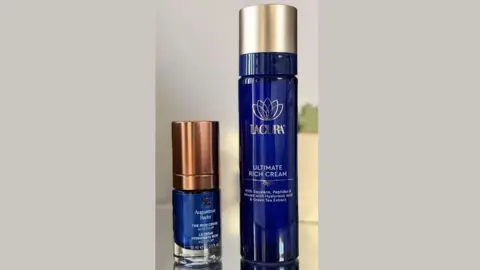
Rachael rushed to her nearest outlet to purchase the store-brand face cream for £8.49 for 50ml - a small portion of the £240 price tag of the luxury brand 50ml cream.
Its streamlined blue packaging and gold lid of both items look strikingly alike. And though Rachael has not used the luxury cream, she says she's satisfied by the alternative so far.
Rachael has been purchasing skincare dupes from popular shops and grocery stores for some time, and she's not alone.
More than a quarter of UK shoppers say they've tried a beauty or cosmetic alternative. This jumps to nearly half among millennials and Gen Z, according to a recently published study.
Lookalikes are skincare products that copy bigger name labels and offer affordable options to luxury items. These products typically have comparable names and packaging, but occasionally the components can change significantly.
 Victoria Woollaston
'Expensive Is Not Always Superior'
Skincare experts contend some substitutes to high-end labels are good quality and assist make beauty routines less expensive.
"In my opinion more expensive is invariably better," says consultant dermatologist one expert. "Not all low-budget beauty label is bad - and not all luxury skincare product is the top."
"Certain [dupes] are truly impressive," adds a podcast host, who runs a show with celebrities.
A lot of of the products based on luxury labels "sell out so fast, it's just unbelievable," he remarks.
 Scott McGlynn
Skin specialist Ross Perry argues dupes are fine to use for "fundamental products" like hydrators and cleansers.
"These products will do the job," he explains. "They will perform the essentials to a satisfactory standard."
Ketaki Bhate, thinks you can cut costs when searching for simple-formula products like HA, niacinamide and a moisturizing ingredient.
"If you're buying a single-ingredient product then you're probably going to be fine in opting for a lookalike or something which is very inexpensive because there's not much that can be problematic," she explains.
'Don't Be Influenced by the Box'
But the experts also suggest consumers investigate and say that higher-priced products are at times worth the additional cost.
With premium skincare, you're not just covering the brand and promotion - at times the higher cost also stems from the formula and their standard, the potency of the active ingredient, the science employed to create the product, and studies into the products' performance, she says.
Facialist Rhian Truman argues it's worth questioning how certain alternatives can be sold so inexpensively.
Sometimes, she believes they may have filler ingredients that don't have as significant benefits for the complexion, or the components might not be as well sourced.
"The big doubt is 'Why is it so low-priced?'" she remarks.
Commentator McGlynn notes sometimes he's purchased skincare items that appear comparable to a well-known label but the item has "little similarity to the luxury product".
"Do not be convinced by the outer appearance," he cautioned.
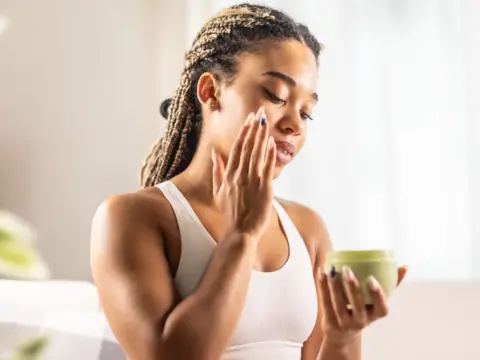 SimpleImages/Getty Images
Regarding advanced products or ones with ingredients that can irritate the complexion if they're not made correctly, such as retinols or vitamin C serums, Dr Bhate recommends using more specialised companies.
The expert states these typically have been subjected to expensive studies to determine how effective they are.
Beauty products must be evaluated before they can be available in the UK, explains consultant dermatologist Emma Wedgeworth.
If the company makes claims about the efficacy of the item, it requires data to back it up, "however the brand does not always have to conduct the testing" and can instead reference testing done by different companies, she says.
Examine the Ingredients List of the Pack
Are there any ingredients that could indicate a product is low-quality?
Components on the list of the container are arranged by concentration. "Potential irritants that you should look out for… is your mineral oil, your sodium lauryl sulfate, parfum, benzoyl peroxide" being {high up


